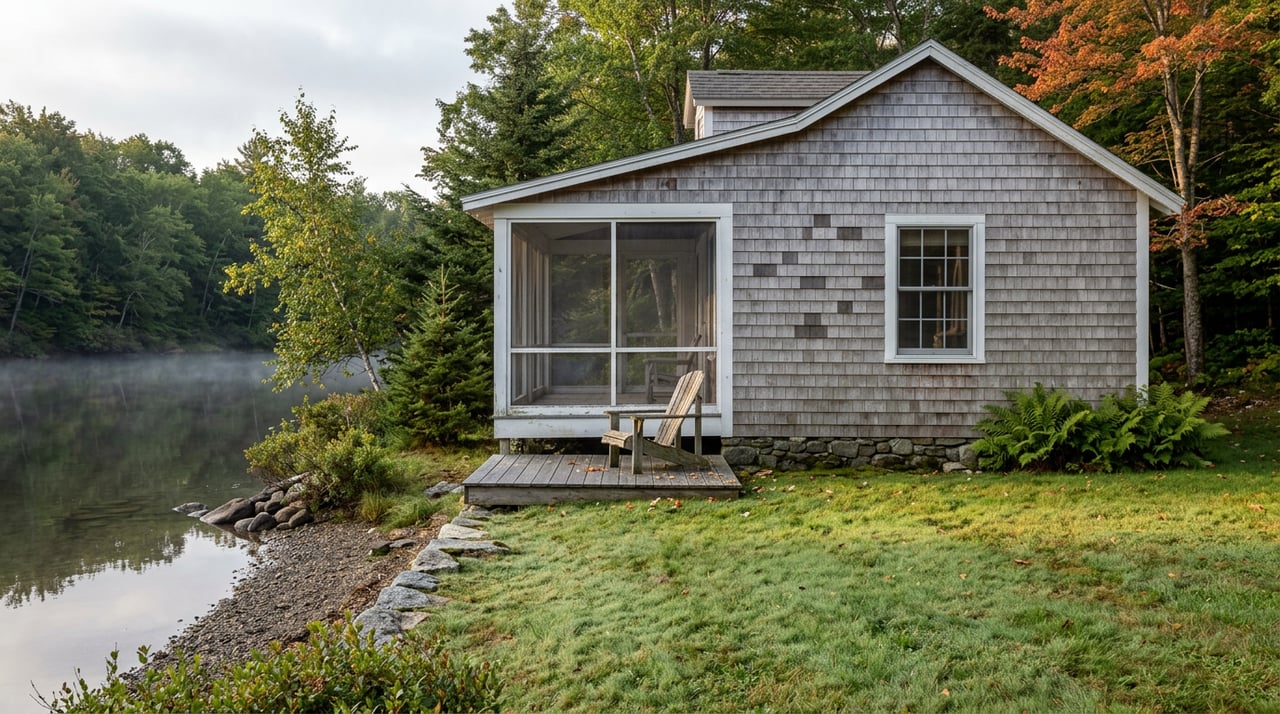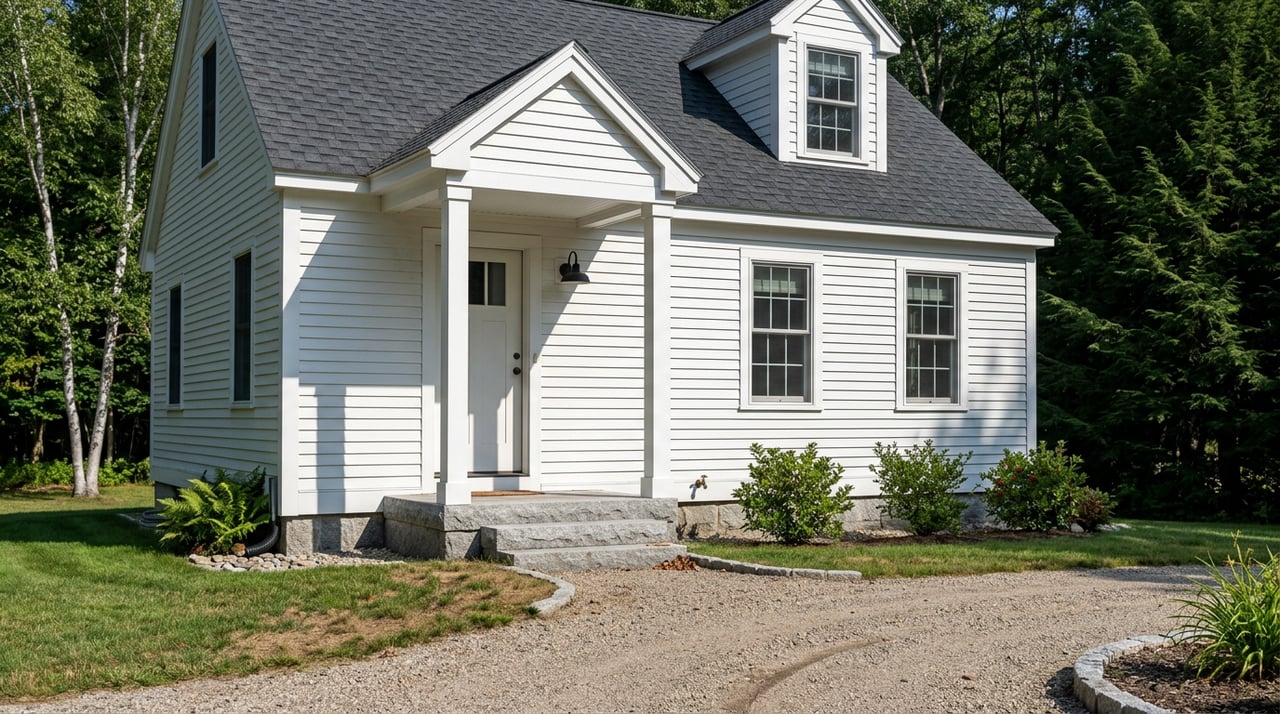
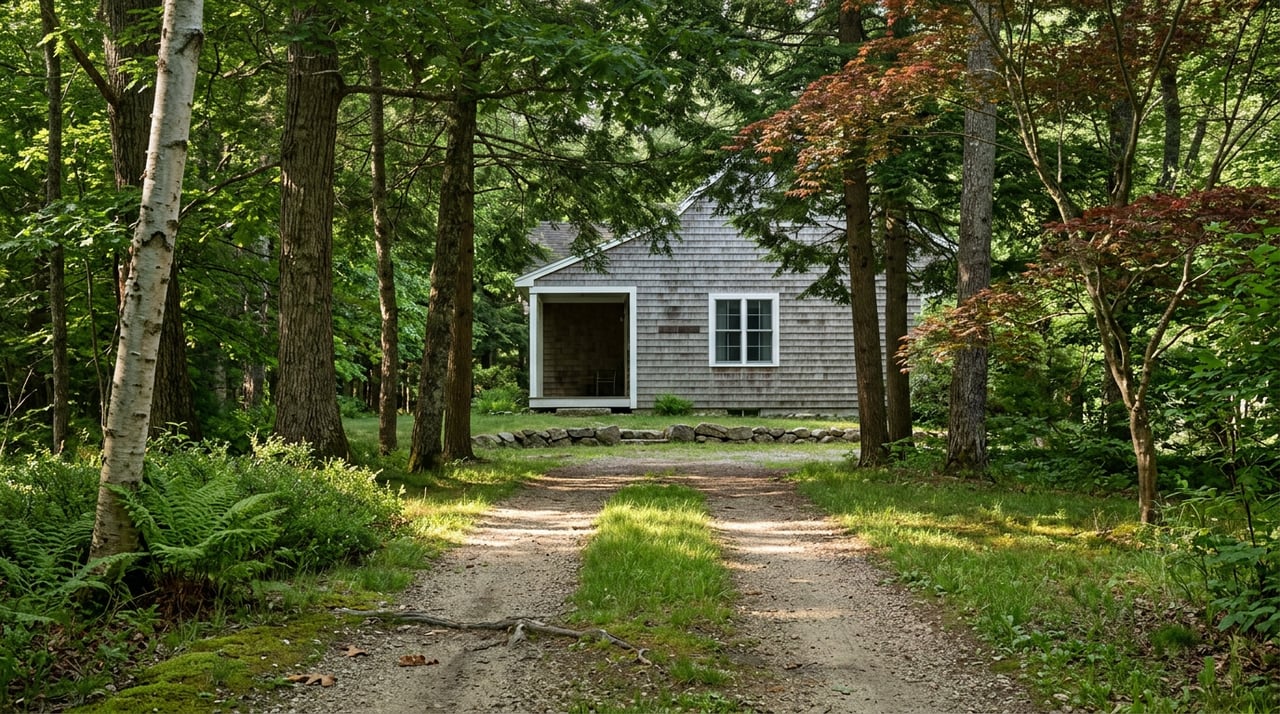
Picture two nearly identical camps on the same gravel road outside the village, both listed at the same price, both with the same view of the same ridge. One buyer is financing with a VA loan. The other is financing conventional through Fannie Mae. All else equal, the VA buyer could be signing at the closing table while the conventional buyer is still waiting on a signature from a neighbor three driveways down who has no interest in signing anything.
That gap has nothing to do with the house. It has everything to do with a financing rule most buyers, and more than a few agents, don't know changed a few years ago. If you're looking at a secluded property in Jackson, the private road under your tires might be the single biggest variable in how smoothly your purchase closes, and which variable it is depends entirely on how you're paying for the house.
What a private road actually is under New Hampshire law
New Hampshire doesn't have a clean statutory definition of "private road." The state's roadway law has been developing since the 1600s, and the line between a shared driveway and a private road is still drawn case by case rather than by a single bright-line rule. The practical distinction that shows up most often in planning and building-permit contexts is size: a shared driveway typically serves no more than two dwellings, while anything serving three or more is treated as a private road.
That distinction matters in Jackson specifically. The town's own subdivision checklist requires that any proposed subdivision with three or more dwelling units on a private road include plans for a dry hydrant or fire pond, on top of the standard maintenance and repair statement that has to be filed with the planning board before final plat approval. In other words, once a private road crosses that three-lot threshold, Jackson expects fire access to be solved on paper before anyone breaks ground, not worked out later by whoever happens to own the closest pond.
The law behind the town's own private roads page
Jackson's Highway Department maintains a page devoted entirely to private roads, and it points directly to RSA 231:81-a, the state law passed in 2019 that fills the gap when there's no written maintenance agreement. The statute says that when more than one residential owner benefits from a private road, each owner has to contribute equitably to the reasonable cost of maintaining it, and any owner can bring a civil action to enforce that if a neighbor won't pay their share.
What's easy to miss is why that law exists. According to the New Hampshire Law Library's own summary, the statute was written specifically to codify existing common law around easements so that buyers and owners applying for certain federally-backed mortgages would have a statutory answer in place even when the neighbors never got around to signing anything. The legislature wasn't just settling neighbor disputes. It was patching a hole that mortgage underwriters kept running into.
That's the thread worth pulling on, because the hole didn't stay patched the same way for every loan type.
A road association solves one problem, not every problem
Older camp roads and some ski-adjacent developments in the Valley often have a formal road association behind them, typically formed as a nonprofit corporation under RSA 292, with dues, bylaws, and elected officers. When one exists and is functioning, it takes real uncertainty out of a purchase. When one doesn't, buyers are relying on informal goodwill that can hold for years and then unravel the moment a property changes hands and a new owner has different priorities.
Even a well-run association has limits worth knowing before you sign. In a 2025 case out of Dunbarton, the New Hampshire Supreme Court addressed a private road called Millie's Way, governed by a maintenance association with a two-thirds vote requirement for action. A neighbor argued that because the association hadn't voted to authorize a lawsuit, individual members couldn't sue over unauthorized use of the road. The Court disagreed. It found that the maintenance agreement governed upkeep, not who owned the ground underneath, and that the owner of that ground retains the right to exclude unauthorized users regardless of what the association's bylaws say about voting. The ruling was issued as an order rather than a full opinion, so it carries no binding precedent, but it signals how a New Hampshire court is likely to read similar facts. The takeaway for a Jackson buyer: an association can organize plowing and paving, but it doesn't automatically settle who has the legal standing to control access.
The financing gap that decides how much paperwork you actually need
Here's where the loan type stops being a background detail and starts driving the timeline. The federal and quasi-federal loan programs do not treat private roads the same way, and the differences are specific enough to matter at the negotiating table.
| Loan type | Recorded maintenance agreement required? | What's actually required |
|---|---|---|
| Conventional (Fannie Mae) | Generally yes | A legally enforceable, recorded agreement or covenant for street maintenance |
| Conventional (Freddie Mac) | No | A recorded permanent easement and maintenance to community standards |
| VA | No, as of a November 2022 policy change | A recorded permanent easement or right-of-way showing continuous access to a public road |
| FHA | No | A recorded easement, ownership interest, or HOA-maintained status |
| USDA | No | A recorded easement or a street maintained by a homeowners association |
The VA change is the one that catches people off guard. For years, VA loans required the same kind of joint maintenance agreement Fannie Mae still asks for, signed by every owner on the road. As of November 2022, that requirement was dropped in favor of simply documenting a recorded, permanent easement that proves continuous access to a public road. A lender explainer confirmed this policy was still in effect as of April 2026, so it isn't a temporary workaround, it's the current standard. That means a VA buyer on a Jackson private road with no formal maintenance agreement at all may sail through underwriting on the strength of a clean easement, while a Fannie Mae buyer on the identical road, with the identical missing agreement, can find their loan stalled while a title company or attorney tries to get every abutting owner to sign something.
What this means if you're selling a secluded Jackson property
If your Jackson listing sits on a private road without a recorded maintenance agreement, the honest answer to "will this be a problem" is: it depends on who makes the offer. A cash buyer or a VA buyer with a clean recorded easement may never ask the question. A conventional buyer going through Fannie Mae almost certainly will, and getting every neighbor to sign a new agreement mid-transaction is slower and more uncertain than getting it done before the property ever hits the market.
It's also worth knowing that a private road's status isn't necessarily permanent. Jackson's Select Board minutes from November 25, 2025 describe residents working through the process to petition the town to accept a road once paving and improvements meet standard. That path requires a public hearing, a warrant article, and a town vote, and the board's own minutes noted the vote likely wouldn't happen until roughly a year past the town's following March meeting, putting any acceptance well into 2027. That's not a quick fix for a pending sale, but it's a real option for owners thinking further ahead.
A short due-diligence list before you fall in love with the road
- Ask whether a recorded maintenance agreement or road association exists, and if so, get a copy before you write an offer
- If no agreement exists, ask your lender early which loan type you're using and what that specific program requires for private road access
- Request a title search through the registry of deeds to confirm any recorded easements, covenants, or association documents tied to the property
- If you're a seller, talk to a real estate attorney about getting a maintenance agreement recorded before listing, especially if your likely buyer pool includes conventional financing
- Don't assume a road association solves everything. Ask specifically who owns the land under the road and whether that owner's rights are separate from the association's maintenance authority
Frequently asked questions
Does a private road automatically lower a home's value in Jackson? Not automatically. It depends heavily on whether the road has a recorded agreement or association in place and how that lines up with the financing your eventual buyer pool is likely to use.
Can a private road become a public, town-maintained road? Yes, but it takes time. In Jackson, that process runs through a public hearing and a town meeting warrant article, and the town's own Select Board minutes from late 2025 pointed to acceptance landing more than a year out.
What if there's no agreement at all and I'm buying conventional? New Hampshire's RSA 231:81-a gives you a legal right to seek equitable contribution from your neighbors even without a signed agreement, but enforcing that in court is slow. A recorded agreement negotiated before closing is almost always the faster, cleaner path.
A secluded road in Jackson can be exactly the setting you're looking for, but the paperwork behind it deserves the same attention as the property itself. If you're weighing a private-road property here or anywhere in the Mt. Washington Valley, Saco Valley Real Estate can walk through what's recorded, what isn't, and what your specific financing will require before you're locked into a timeline you didn't expect. Start Your Local Search today.